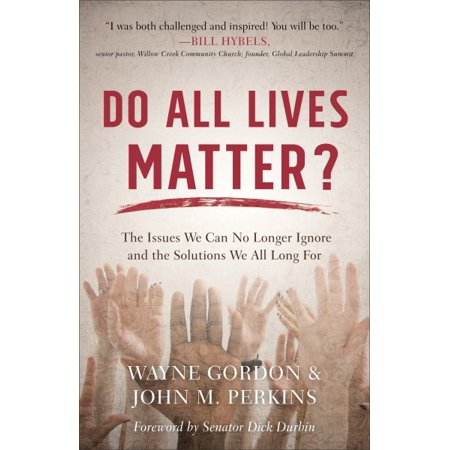
 Do all lives matter? The answer seems easy. All of us would say that all lives matter. And the fact is, you would be right. But the reality that we live in today does impose a hierarchy signifying that certain lives matter more than others. Throughout American history we have seen many times in which certain people’s lives were seen as less significant than others. This is the heart of what John Perkins is getting at in his book “Do All Lives Matter?” John states early in the book that “if we are going to make progress with regard to behaving as if all lives matter, we need to make a genuine effort to understand others and the realities and struggles they face.” (p. 25).
This is not a book advocating for violence to advance it’s cause although we need to be sympathetic to why someone might act out from a feeling of hopelessness and despair. Although John has faced a lot of discrimination in his life he reasons that the solution is not to fight violence with violence but to fight it with love. He says that “We need to work together to create a climate that clearly acknowledges that all lives matter. All people have inherent dignity but many don’t know it, feel it, or believe it.” (p. 32)
John goes on to illustrate within our history when indigenous lives, women’s lives and black lives have been and still are being treated as lesser than others. It is important that we understand our history and the ripple effects that are still being felt by our treatment of the marginalized. In making the case for the continued marginalization of black people, John states that “Yes, African American people – as all people – ought to take personal responsibility for making the right choices, even in the midst of an uphill battle. But this is easier said than done. To relegate the slavery era and subsequent generations of racist legal and social policies to the past is not just logically absurd but is at the least insensitive if not immoral. Centuries of discrimination continue to shape the lives and limit the choices of African American people in our country today.” (p. 43)
The goal that all of us essentially wants is to live a life of peace and love knowing that justice is fair and balanced for all people. Instead of causing more reasons to fracture and splinter us as a society, we need to strive for wholeness, equality and reconciliation for all. And the majority should not sit back and ignore the problems of the minorities and marginalized but instead, work together so that everyone has hope and equality. Do all lives matter? Absolutely! Is it a reality in our country though? No. So we have work to do to build bridges and unity between groups so that we can eventually say that all lives really do matter. And might I add that the church should be the leader in modeling what this looks like to the society and helping to implement change in the larger culture. Perkins reminds us that “Laws might change behavior but they cannot change hearts. A true revolution in our country – one that claims victory over violence and eliminates all exclusions to the proclamation that all lives matter – will come only as hearts are changed and as we recognize who our neighbors are and learn to truly love them as ourselves.” (p. 71) It is the church’s responsibility to live this out as kingdom believers recognizing and living out our unity in Christ. Jesus made a regular habit of identifying with the marginalized by bringing hope, healing and restoration into their lives. It is up to us to do the same.
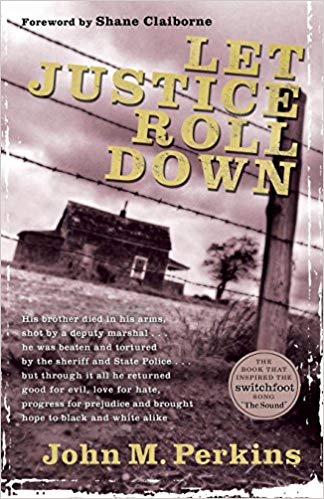 I am a big Switchfoot fan. I have loved their musical throughout the time I have been in ministry. It has been fun to see them evolve as artists. But there was one song that stuck in my head called “The Sound”. The reason was because of this lyric:
 Do we worship a schizophrenic God? A flat reading of the Bible seems to suggest that.
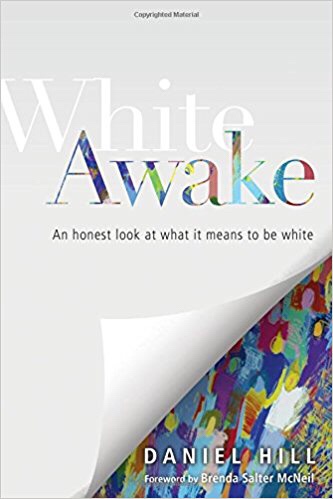 I recently read “White Awake: An honest look at what it means to be white” which helped to bring much clarity to issues within our country related to race. Author Daniel Hill begins by telling his story on how he wanted to create a multi-ethnic church in Chicago. While he had good intentions, the results for diversity were abysmal. Much of his congregation was just as white as he was. In attempting to find out why he was unable to attract a multi-ethnic crowd he decided to visit with a hand full of local non-white clergy. In doing so, he was humbled to realize how little he knew about culture that impacted people of color. His mentors exposed the fact that almost every possible influence in Daniel’s life was from white culture. Daniel realized quickly that people of color have many different experiences as a minority culture in contrast to the dominate influence of white culture in America. What seems normal to most white people is not necessarily what people of color experience. All throughout our 200+ history people of color have been judged as “less than” in comparison to white culture. Daniel states that “When the journey begins to feel like any combination of scary, confusing, disorienting, or even painful, we have a privilege that people of color do not: we can walk away; we can go back to ‘normal,’ if we choose.” (p. 38)
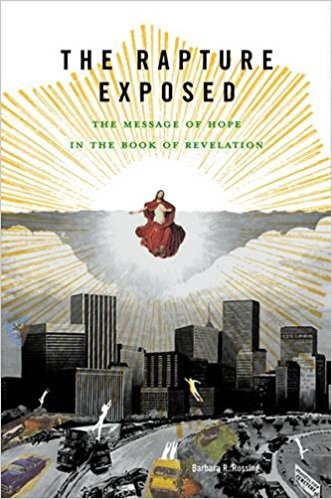 I remember my first experience praying to ask Jesus to come into my life. Unfortunately it was not because I was stricken by God’s love for me or impacted by the message of Jesus. Instead, I did it because I was scared shitless after watching an “end-times” movie called A Thief In The Night. This movie took a literal view of the book of Revelation interpreting it in its popular dispensational view that Jesus will rapture all the Christians out of the world and those “left behind” will have to fend for themselves as things go from bad to worse before Jesus decided to fully return to establish his kingdom and send all evil-doers to eternal punishment. I was overwhelmed with the terror and wrath of God and out of fear wanted to make sure I would go to heaven. Of course, growing up with the “left behind” type of theology there were moments of sheer terror when I walked into the house to find none of my family, thinking that God snatched them all up and I was not! But then all of a sudden a person emerged from another part of the house so I breathed a sigh of relief knowing that the rapture didn’t happen.
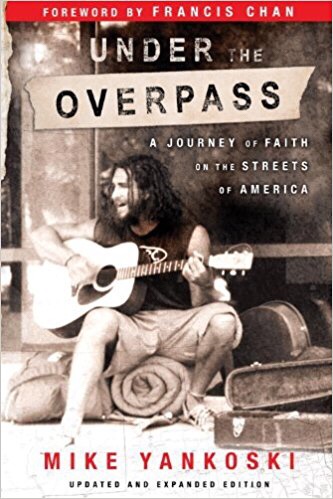 I just finished Under the Overpass by Mike Yankoski. This book details a journey that lead Mike to spend several months of his life living on the streets of major cities throughout the country. Mike states that according to the National Coalition for the Homeless, the United States has more than 3.5 million homeless people at any given year.
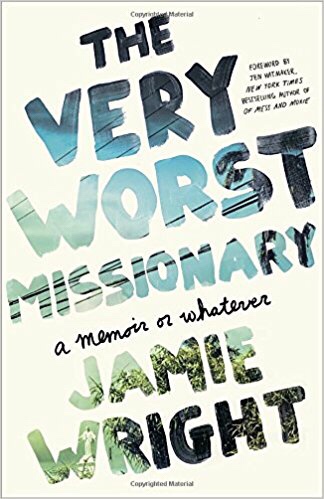 This was a fascinating memoir written by Jamie Wright who shares her life’s journey that led her to becoming a missionary. What is captivating about her story is how she deconstructs the idea of what it means to be a missionary and the reality of what is actually happening. Evangelical Christianity has a tendency to put those called to be missionaries on a very high pedestal. But through her own experiences and her honesty, Jamie recalls the dichotomy of what she could portray of herself on the internet as a missionary and the reality of what the experience was actually like. She is honest about her own experiences, her own shortcomings and mistakes, and what she observed about the missionary culture in Costa Rica. She pulls back the covers on the evangelical church’s culture and how it emulates missionaries. Jamie describes how she went with great expectations to change the world but instead found out that the reality of her experience did not match up. With brutal honesty she started a blog titled Jamie the Very Worst Missionary, where she doesn’t hold anything back but begins to critique herself and her experiences with missions. Anybody involved in any type of mission work needs to read this book but be ready for some hilarious stories, “salty” language and some harsh truths that critique our modern day concept of missions. If the rose-colored glasses of your Christian faith are smudged and cracked from your experiences with church or missions then this book helps us to be honest with ourselves and the reality of our brokenness, individually and as a church.
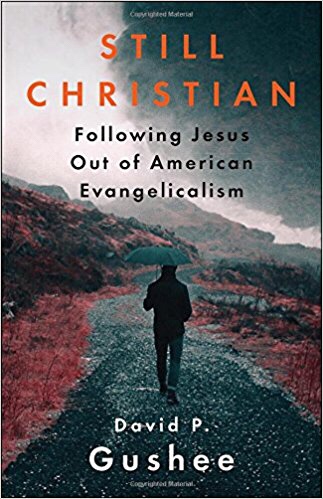 I just recently read a great book by David P. Gushee entitled “Still Christian: Following Jesus out of American Evangelicalism”. It is a story that details the authors’ personal journey through modern day evangelicalism as a leading Christian ethicist. This book details the story of a educator who found his roots in the conservative church but over the course of time found himself on the outskirts of the evangelical world. The book details the fundamentalist takeover of the Southern Baptist denomination as well as the evangelical quest for political power through the election of Trump. Eventually the author comes to terms with supporting the LGBT community through his essays detailed in his book “Changing Our Minds”. Gushee also highlights the negative reactions he got from his tribe over this change of heart.
 Scott Russ